


Last week I had lunch with a pal who was planning a conference session and looking for a way to get people talking about a specific set of problems. I suggested she might use a method called ‘complaints with recommendations,’ but didn’t have a good link to share with instructions. So now there’s a link, and you’re reading it. The lunch-to-link pipeline works.
Complaints with recommendations is my own swizzle of an activity from the social worker and psychologist Virginia Satir. So after I share the method, I’ll tell you a bit about where it came from.
What this is and when to run it
Complaints with recommendations is a simple way to get feedback and ideas on what’s not working while in the middle of a project. You might use it during recurring reviews, between days of a multi-day event, or when working through multiple drafts of a document or deliverable. Don’t use it at beginnings, where there has not been time for complaints to ripen, or at endings, where it’s too late to act on recommendations.
What’s fun about this is that you are encouraging complaints, and recasting complaining in a structured way as something to be done broadly, and not kept to oneself or muttered in a backchannel. It’s impossible to get through one of these without people smiling.
The simplest version
You’ll need about 5 minutes and a shared visual space like a whiteboard or notes document. Invite everyone to share their complaints, but explain that each complaint must be offered with a recommendation.
A typical complaint might be:
- Complaint → The schedule changed and I had to scramble.
- Recommendation → Lock the schedule 24 hours in advance.
Collect these, and give everybody a chance to briefly state or read their complaint and recommendation.
You could stop here, and that’s good enough. People get to be speak and be heard. The format has a clarifying effect for the person sharing a complaint: offering a recommendation tends to make a complaint more specific and grounded. And you have some ideas to act on.
Optional: a second round of recommendations
If you want to go a little further, offer the following. Let people know that the complaints—now posted somewhere all can see them—are untouchable. Each represents one person’s experience that they were willing to share. So take the complaints as given, but invite people to offer additional recommendations about how to resolve the complaints they’ve seen and heard.
You might end up with:
- Complaint → The schedule changed and I had to scramble.
- Recommendation → Lock the schedule 24 hours in advance.
- New recommendation → Lock the schedule two days in advance.
- New recommendation → When the schedule changes, send an update to some relevant group.
My experience is that people who shared complaints enjoy seeing additional recommendations. And new ideas sometimes come up too.
There’s no need to solve anything immediately. Instead, briefly thank everyone and indicate who will be acting on recommendations and following up on things as needed.
Origins & Virginia Satir’s temperature reading
Virginia Satir developed a temperature reading activity as part of her psychology practice. It originated in family therapy (a field that Satir made a huge mark on in her career), but has found additional use in organizations.
You can learn the temperature reading activity in this guide from Dale Emery, and another from Marc Evers, Nynke Fokma, and Willem van den Ende. Temperature reading as documented here is a fantastic way to do a group check-out at the end of a day together.
What you’ll notice is that complaints with recommendation is a single step from this temperature reading. My tweak is to open up a second round of recommendations based on everybody’s complaints, and to treat it as a standalone and not part of a larger ceremony.
An encouragement
Think of a situation where you could use complaints with recommendation to make complaining a ‘good’ or constructive thing to do instead of an activity people do in secret. Flipping things around like this is fun. Give it a try, no expertise or experience is required.
In Tacoma or the South Sound area? You’re invited
On September 19—the weekend after next as of this writing—I’m hosting a free in-person group facilitation method swap and there are still a few spots left. You’re invited:
 Brian Kerr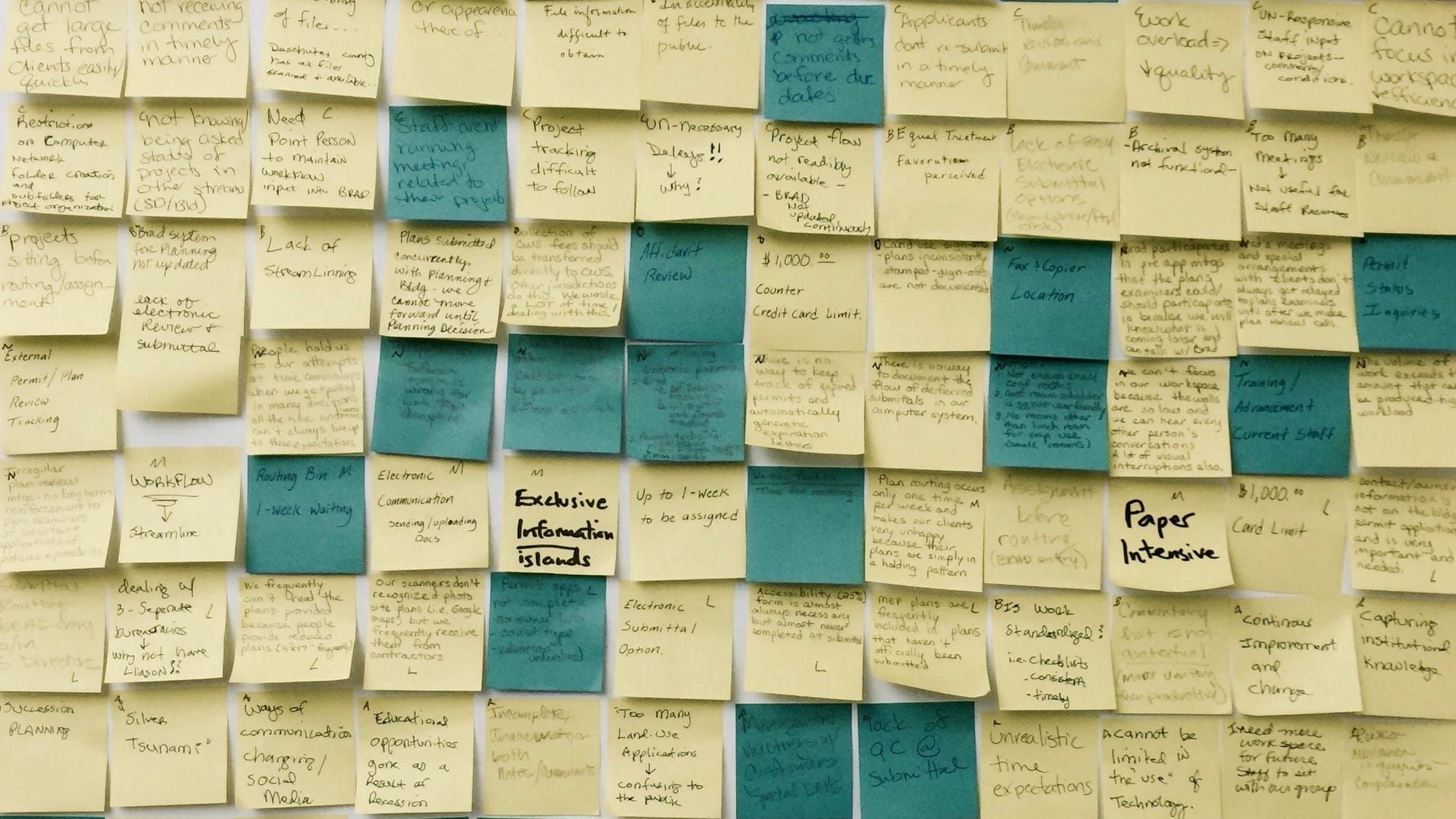
I’m already planning the next one, to be held a little later in the year and closer to Seattle.